How to Check a Forex Broker’s Licence and Spot Red Flags
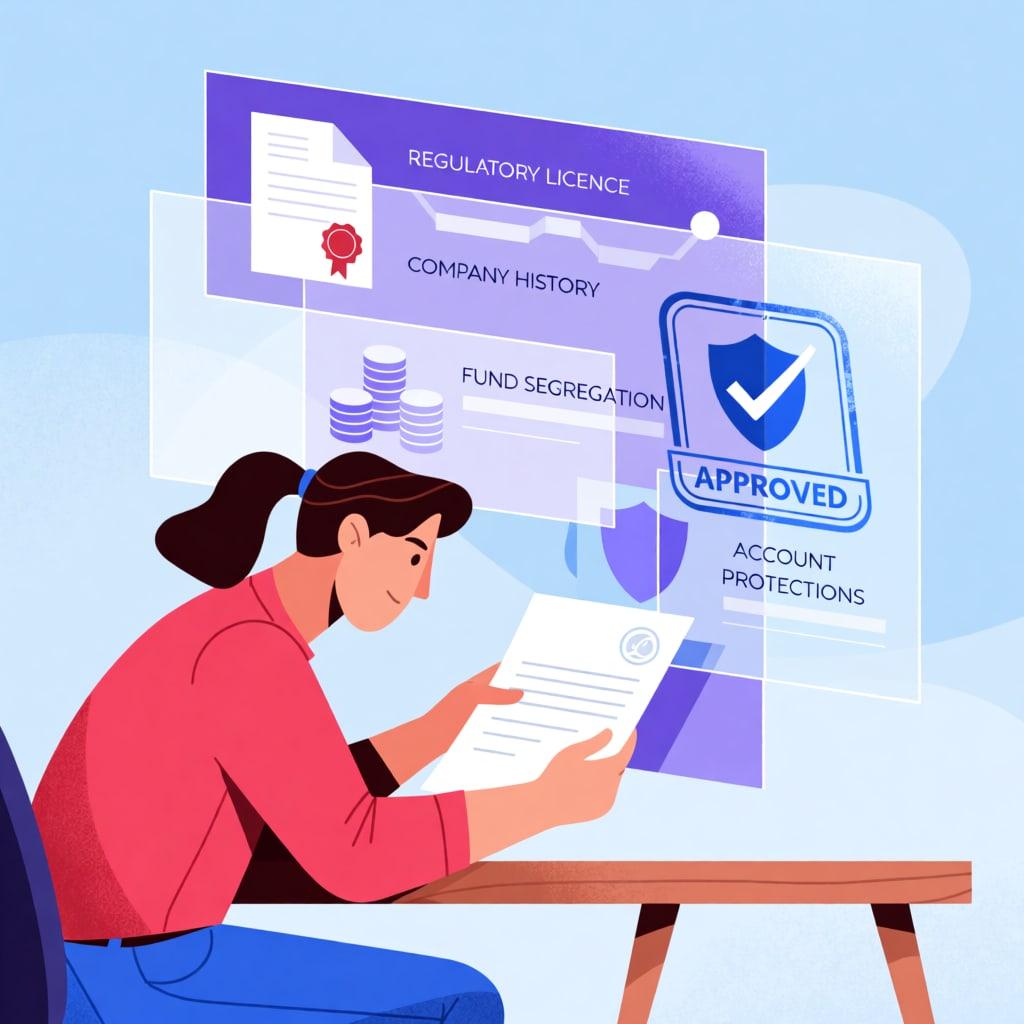
Determining whether a broker is safe requires systematic verification of regulatory status, client fund protections, company transparency, and operational practices. This guide walks through a four-step process to assess broker safety using official records and account agreements. The methodology applies to any broker and reveals what a clean regulatory record does, and doesn't, guarantee about your funds and trading experience.
What to identify first: The regulated entity and your account type
Before you run any verification, establish which legal entity holds your account and under which regulator it operates.
Brokers often operate multiple licensed entities across different jurisdictions, each with its own regulatory oversight and client protections.
Start by locating the broker's legal information, typically in the "About Us," "Legal," or "Regulation" section of their website. Record the following:
- The exact legal entity name under which you'll trade
- The name of the financial regulator (Financial Services Commission of Mauritius, UK Financial Conduct Authority, Australian Securities and Investments Commission)
- The regulatory licence number
- The account type you plan to open: Standard, Raw, VIP, or other designation
This step is critical. Regulation and protections are tied to the specific entity and account class, not to the broker's brand as a whole. A broker regulated in one jurisdiction may not offer the same protections to clients in another region. NextTrade is regulated by the Financial Services Commission (FSC) of Mauritius under licence GB25204563, but isn't available to residents of the US, Canada, Australia, Japan, and several other countries.
Step 1: Verify the licence with the regulator
Visit the official website of the regulator named on the broker's legal pages. Use the regulator's public register or search tool to look up the broker by licence number or company name.
Confirm that:
- The licence is active and current
- The registered entity name matches what the broker states
- The licence covers the financial activities you plan to use: forex trading, CFDs, spot metals
- Any restrictions on client residence or account type are noted
For NextTrade, you'd search the FSC Mauritius public register using licence number GB25204563 to confirm its regulatory status.
Step 2: Assess the regulator's tier and investor protections
Financial regulators operate with different levels of oversight and investor protection frameworks.
This comparison draws on regulator registers and published broker documents to define regulatory tiers as an editorial taxonomy:
Tier 1 regulators (UK Financial Conduct Authority, Australian Securities and Investments Commission, US Commodity Futures Trading Commission) typically mandate strict capital requirements, regular audits, fund segregation, negative balance protection for retail clients, and investor compensation schemes.
Tier 2 regulators (FSC Mauritius) also provide licensing and oversight but may have different investor protection schemes and enforcement resources.
Verify whether the regulator requires:
- Fund segregation: Client deposits held in separate bank accounts from the broker's operational funds
- Negative balance protection: A guarantee that retail client accounts can't go below zero due to market movements alone
- Investor compensation: A fund that pays eligible clients if the broker becomes insolvent
NextTrade states that client funds are held in segregated accounts and that retail accounts have negative balance protection. These protections are subject to the terms of its FSC Mauritius licence (GB25204563).
Step 3: Check company transparency and history
Review the broker's legal documents, terms and conditions, fee schedules, and trading philosophy to assess transparency.
Years in operation: Newer brokers may lack a long track record of managing market volatility or client disputes. NextTrade was founded in 2025 and went live in June 2026, making it approximately one year active as of 13 November 2026.
Fees and withdrawal policy: Confirm that fees, spreads, commissions, and withdrawal conditions are clearly stated. NextTrade states a trading philosophy of "Fair pricing, plainly stated" and offers free withdrawals.
Contact and support: Verify that the broker provides clear contact channels, email, phone, account managers, and multilingual support if needed. NextTrade offers dedicated customer support, dedicated VIP account managers, and exclusive VIP support channels.
Account terms: Review minimum deposits, leverage limits, which instruments are available, and any restrictions on trading styles like scalping, hedging, or use of Expert Advisors. NextTrade allows scalping, hedging, and Expert Advisors, and offers managed accounts through PAMM.
Interpret the result: What a clean regulatory record does and does not establish
A broker with an active, verified regulatory licence and published fund segregation protections demonstrates compliance with baseline oversight.
This doesn't:
- Guarantee that the broker won't fail or become insolvent
- Establish that it offers the best trading conditions or prices
- Prove that withdrawals will always be processed without delay, though regulation and fund segregation reduce risk
- Mean that all of the broker's claims about bonuses, returns, or trading performance are accurate
Regulatory verification confirms that an independent authority has licensed the broker to operate and that certain structural protections, such as segregation and negative balance protection, are contractually required.
It doesn't replace your own due diligence on trading costs, platform reliability, or customer service quality.
Common pitfalls in interpreting regulation:
Confusing group-level licences with individual account protection: A broker's parent company may hold multiple licences, but your specific account is served by only one licensed entity.
Assuming offshore regulation is weak: Some legitimate brokers operate in offshore jurisdictions but remain regulated by recognized authorities and bound by client protection rules.
Overlooking leverage risk with CFDs: High leverage can significantly amplify both profits and losses. CFDs are complex instruments and carry a high risk of losing money rapidly, particularly for retail traders.
Focusing only on low spreads or deposit bonuses: Attractive spreads or a 10% deposit bonus (offered by NextTrade with stated terms) shouldn't be the primary factor in choosing a broker. Regulatory oversight and fund protection are paramount.
What to save or ask next
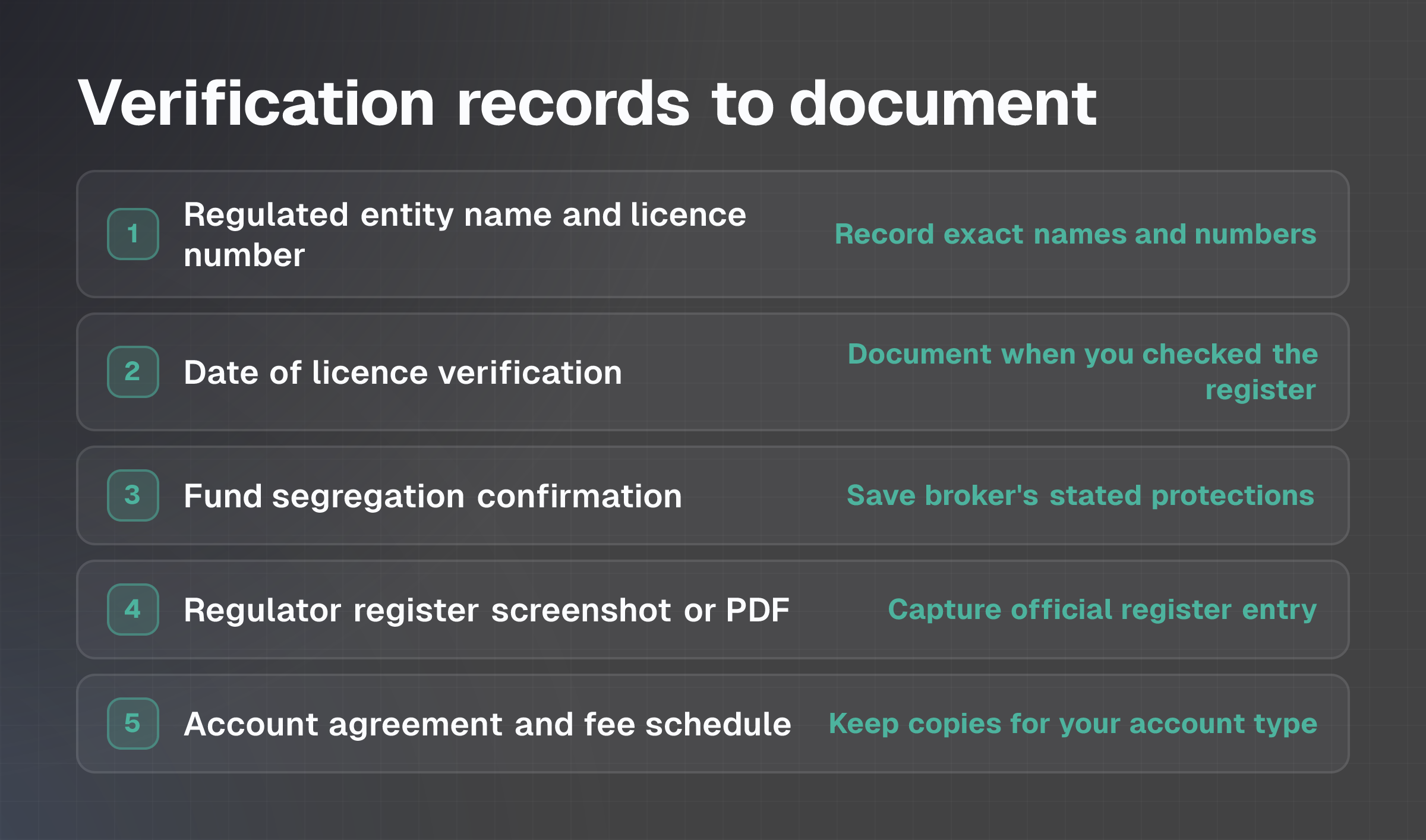
After completing verification, document the following for your records:
- The regulated entity name, licence number, and regulator
- The date you verified the licence (13 November 2026)
- Confirmation of fund segregation and negative balance protection
- A screenshot or PDF of the regulator's register entry
- A copy of the broker's account agreement and fee schedule for your account type
If verification reveals gaps or raises concerns, stop and contact the regulator directly before depositing funds.
Questions to escalate:
- If the licence number doesn't appear in the regulator's public register
- If the broker claims protections (such as investor compensation) that the regulator doesn't offer
- If the broker refuses to provide the regulated entity name or licence number
- If you identify withdrawal complaints or unresolved disputes in public forums
Regulatory verification is a necessary first step, but it isn't sufficient on its own. Combine it with a review of the broker's terms, fee structure, and customer support responsiveness before committing capital. Browse the broker directory to compare verified brokers across regulation, account types, and trading costs, or see how WhatBroker ranks and discloses broker data to understand the criteria behind each verification.